Bayou Sauvage, a wildlife refuge inside the city
Within the city limits of New Orleans, in the east, lies one of the largest urban wildlife refuges in the United States: miles of marsh, lagoons and bottomland forest full of birds.
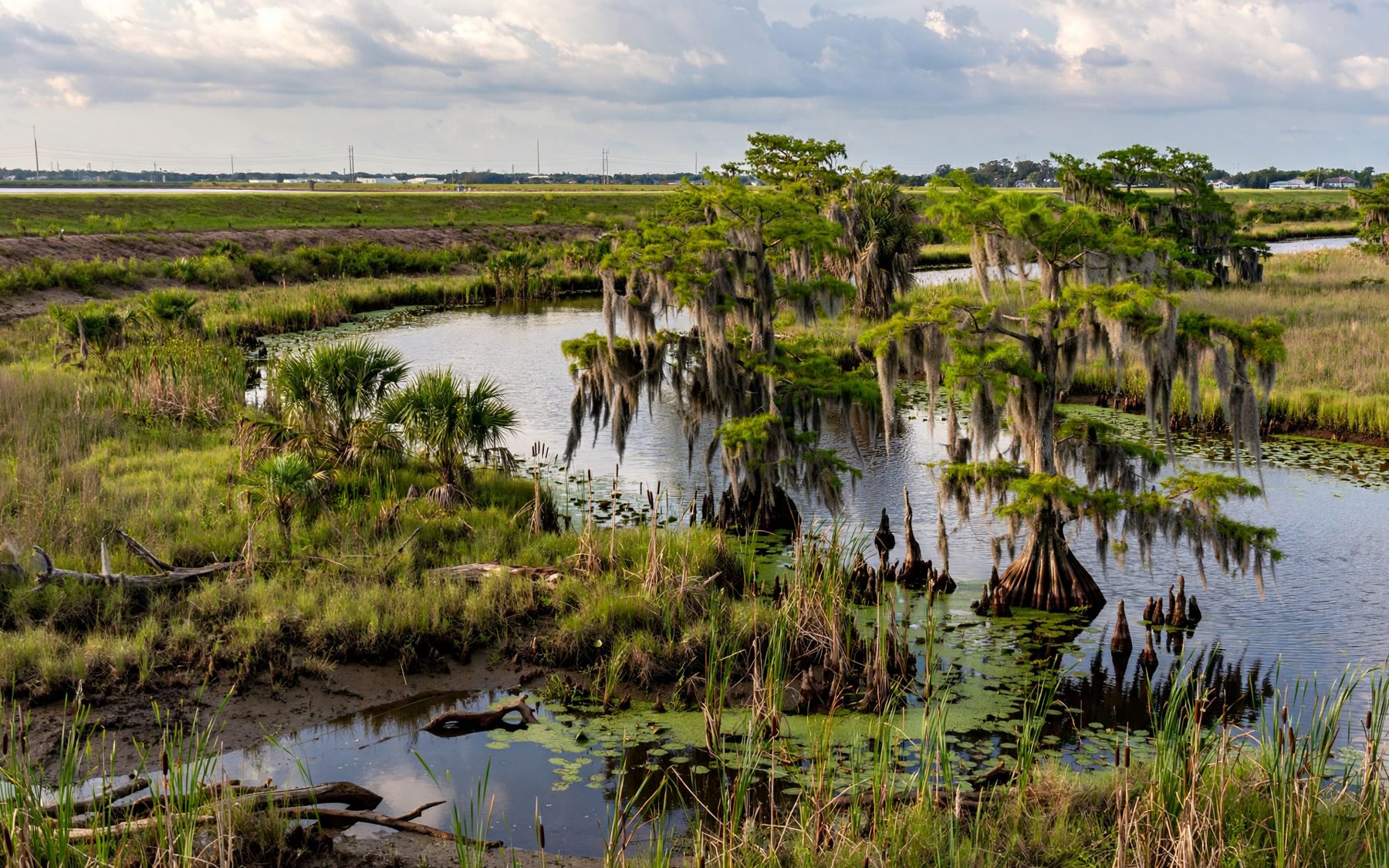
Most people think of New Orleans as a dense old city. Yet within its boundaries, in New Orleans East between Lake Pontchartrain and Lake Borgne, lies a vast area of marsh, lagoons and forest protected as Bayou Sauvage Urban National Wildlife Refuge. Covering tens of thousands of acres, it is one of the largest wildlife refuges inside a city anywhere in the United States, and a haven for birds, alligators and other wetland life.
What the refuge protects
The refuge includes freshwater and brackish marshes, lagoons, bayous and stands of bottomland hardwood forest on slightly higher ground. These habitats support huge numbers of birds, especially in winter, when ducks and other waterfowl arrive from the north. Wading birds, raptors, songbirds and shorebirds are present through the year, along with alligators, turtles, snakes and small mammals.
Trails and boardwalks
The refuge has had a small number of trails and boardwalks, with viewing areas over the marsh and lagoons. Some were damaged in hurricanes and have been closed or rebuilt at different times. Before visiting, check with the US Fish and Wildlife Service for which trails are open and where to park. The refuge is large, but public access is limited to these areas.
Birds through the seasons
Winter is the highlight for birdwatchers, when large numbers of ducks gather on the open water. Spring and autumn bring migrating songbirds through the forested areas. In summer, herons, egrets and ibis feed in the shallows, and ospreys and other raptors hunt over the marsh. Binoculars are essential, and a bird guide helps.
Storms and recovery
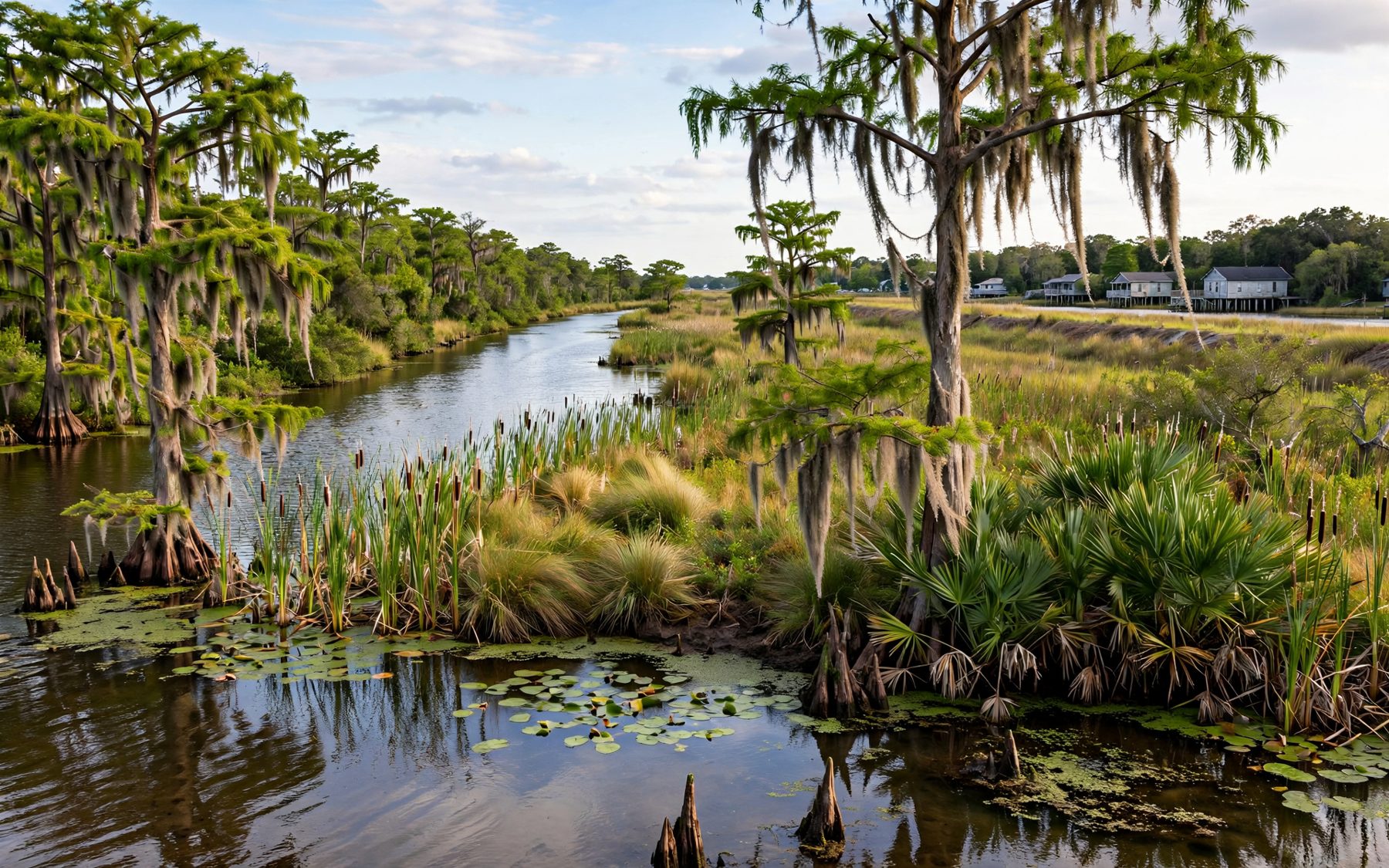
Hurricane Katrina in 2005 caused severe damage to the refuge, as storm surge pushed salt water into freshwater marshes and destroyed trees and facilities. Later storms added more damage. Recovery has been gradual. The refuge's marshes also help protect the eastern parts of the city from storm surge, a role that grows more important as coastal wetlands disappear across Louisiana.
A refuge between two lakes
Bayou Sauvage lies on a narrow strip of land between Lake Pontchartrain to the north and Lake Borgne, an arm of the Gulf, to the south. This position makes it a crossroads for birds and a buffer for the city. The marshes absorb storm surge, the lagoons hold fish and invertebrates that feed birds, and the forest on the ridges gives shelter to migrants.
The refuge was established in 1990, and much of it lies inside the city's hurricane protection levees, which shape its water levels and its wildlife.
Birds and beasts to watch for
Another panel · Swamp trailsBarataria Preserve: boardwalks through the swampHalf a dayOn the water, look for ducks such as teal, pintails and scaup in winter, and for coots and grebes. Along the edges, herons and egrets stand motionless, waiting for fish. Overhead, ospreys and bald eagles sometimes hunt. In the forested areas, woodpeckers and songbirds call. Alligators bask on sunny banks, especially in spring and autumn.
Volunteering and learning
The refuge and its partners have offered guided walks, education programmes and volunteer opportunities, such as habitat restoration and bird surveys. If you are staying longer in New Orleans, these are good ways to learn about the wetlands and help protect them. Check with the refuge for current activities.
Photographing the refuge
The open marshes and lagoons are wonderful for photography, especially at sunrise, when mist lies on the water and birds are active. A long lens helps for birds, and a wide one for the landscape. Stay on trails and boardwalks for your shots, keep your distance from wildlife, and be patient: the best moments come to those who wait quietly.
Why urban refuges matter
An urban wildlife refuge gives city people easy access to nature and protects habitat that would otherwise be built on. In New Orleans, it also helps protect the city itself, as marshes soften the impact of storms. A visit is a reminder that the city is not separate from the wetlands around it, but part of them.
Planning a morning at the refuge
Because trail access changes, plan a visit to Bayou Sauvage around current information from the refuge. Go early, when birds are active and the air is cool, and allow time to stand quietly at the viewing points. Combine it with the lakefront or with a drive along the old highway east of the city, where marsh and water stretch to the horizon on both sides of the road, a reminder of how close the wetlands are to the city.
Bring binoculars, water and patience.
The road up
Bayou Sauvage lies east of the city centre, reached by car along the interstate and local highways. There is no convenient public transport. Allow around half an hour's drive from downtown, depending on traffic. Parking and facilities at trailheads are basic.
Keeping a safe distance
- Alligators live in the refuge; watch from a distance and never feed them.
- Stay on trails and boardwalks; marsh ground is soft and water can be deep.
- Bring insect repellent, water and sun protection; shade is scarce.
- Visit in daylight, and let someone know your plans.
When the shade allows
Winter mornings are best for birds and comfort. Spring is pleasant, with nesting birds and flowers. Summer is hot and buggy; go at dawn. Check for closures after storms and during hurricane season.
For a larger wetland park south of the city, see Barataria Preserve. For birds across the parks, read birds of the city parks, and for the lake on the refuge's edge, the lakefront seawall.