Crescent Park on the Bywater wharves
Along the river below the French Quarter, old cargo wharves have become a long, narrow park of lawns, steel frames and river views, reached over a striking arched bridge.
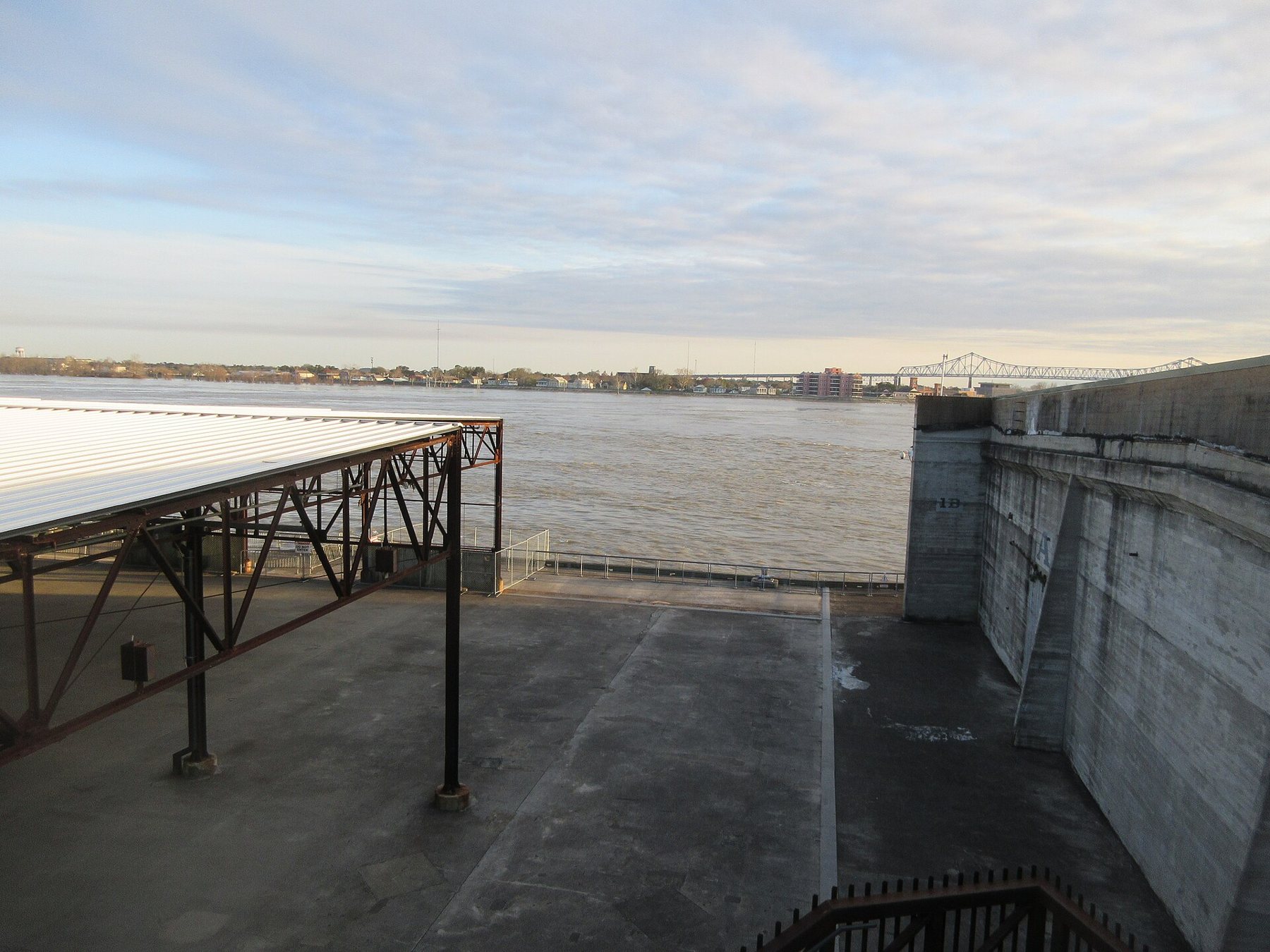
For most of the twentieth century, the riverfront below the French Quarter was a working port, lined with wharves, warehouses and railway tracks, and closed to the public. Crescent Park, opened in 2014, gave part of it back to the city. It runs for about a mile and a half along the Mississippi through the Marigny and Bywater neighbourhoods, a narrow strip of lawns, paths and gardens set among the steel skeletons of old wharf sheds, with views upriver to the downtown skyline.
Ways onto the wharves
The park sits on the river side of the railway tracks and the floodwall, so it is reached by a few raised crossings. The most dramatic is the arched bridge at Piety Street, a steel and timber structure whose rusted arch, sometimes nicknamed the Rusty Rainbow, curves high over the tracks and floodwall. Climbing it gives a sudden view of the river. Other entrances include a crossing near Mandeville Street at the Marigny end and one at the Bywater end. Check which are open, as access points change with maintenance.
Walking the park
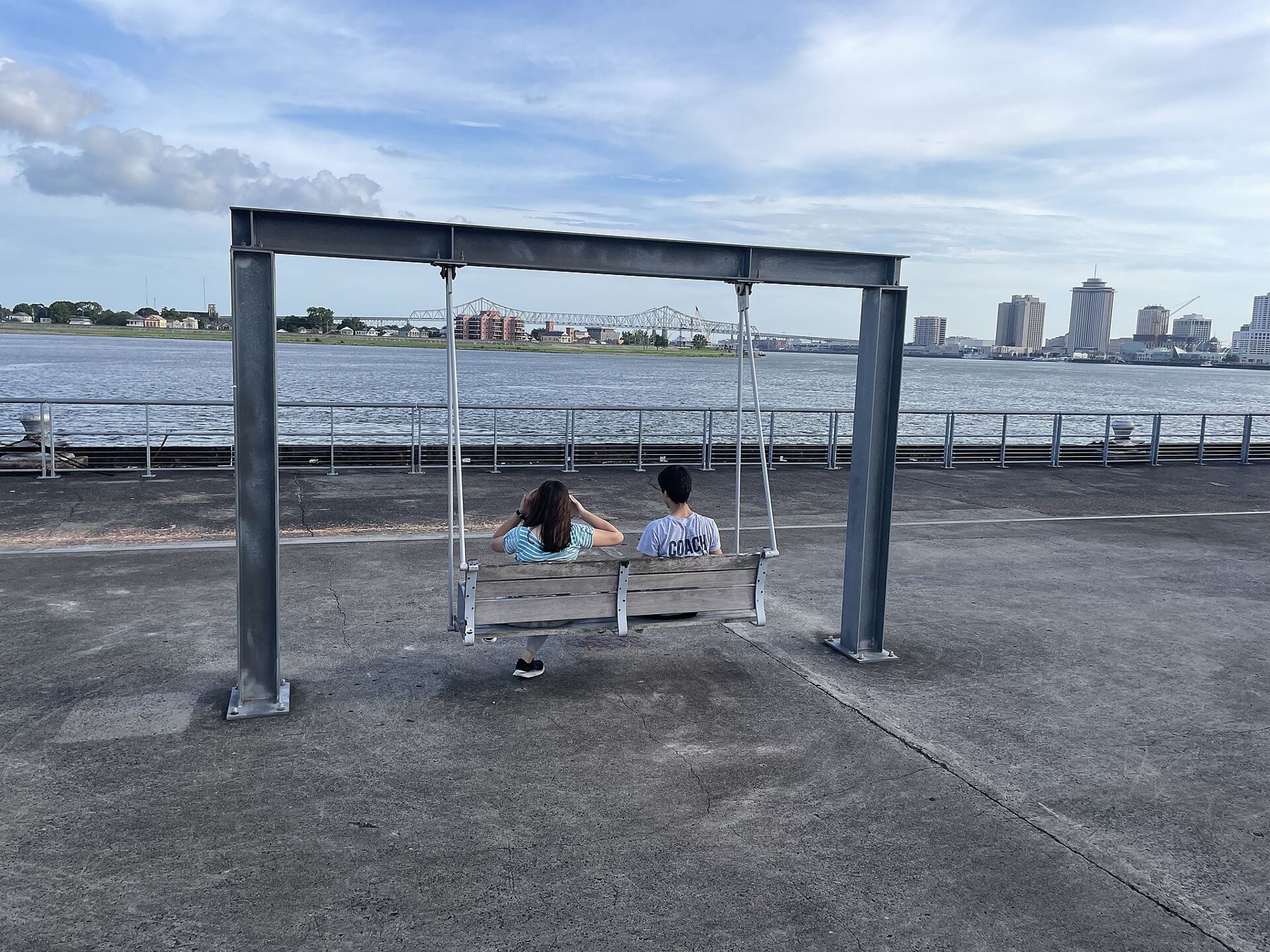
A paved path runs the length of the park, past lawns, native plantings and seating areas. At one point, the frame of an old wharf shed has been kept as a huge open steel structure, a reminder of the port's industrial past. The path is good for a long walk or a slow run, with the river on one side and the old neighbourhoods behind the floodwall on the other.
The river view
The views are the reason to come. Upriver, the skyline of downtown rises over the bend of the Mississippi. Across the water lies Algiers Point. Ships, tugs and barges pass close by, and at dusk, the lights of the city come on along the water. The park faces west across the river, so the late afternoon light can be beautiful.
Shade and heat
Much of the park is open, with limited shade from young trees and the structures. In summer, the sun reflected off the river and the paving makes midday walks hard work. Come in the morning or late afternoon, and bring water. In the cooler months, the park is pleasant all day.
The neighbourhoods behind
The Marigny and Bywater, just inland, are among the city's most characterful neighbourhoods, with rows of brightly painted shotgun houses, Creole cottages, galleries and small music venues. A walk to the park through their streets is part of the pleasure. They are residential neighbourhoods first; respect people's homes and quiet.
A port that shaped the city
Another panel · Levee pathsThe Fly: a riverbank lawn behind the zooAn hour at sunsetThe wharves that the park replaced were part of one of the busiest ports in the world. For two centuries, ships tied up along this stretch of river to load cotton, sugar, coffee and bananas, and the neighbourhoods behind grew up around dock work. As shipping moved to modern container terminals elsewhere, many of the old wharves fell silent. The park keeps a few of their frames as monuments, and the river traffic still passes close by, so the working river is never far away.
Early and late on the wharves
Mornings are quiet, with joggers, dog walkers and the light coming from behind you across the neighbourhoods, falling on the river and the far bank. Evenings bring more people, and the skyline across the bend turns gold and then sparkles with lights. The best plan is to walk upriver in the late afternoon, with the city ahead of you, and stay until the lights come on.
Art and gardens
The park's design mixes industrial remains with new plantings of grasses, shrubs and trees chosen to cope with river winds, heat and heavy rain. Benches and shade structures are placed along the path, and some areas host occasional events and performances. As the planting matures, more of the path will be shaded, but for now, carry a hat.
For a longer outing, start at the Marigny end, walk the length of the park, climb out over the Piety Street arch into Bywater, and wander back through the neighbourhood's streets of painted houses. It makes a satisfying loop of two hours or so.
Seen from the river
Seen from a ship or the ferry, the park appears as a thin line of green and steel along the old wharf front, with the painted houses of the Bywater rising behind. It is a reminder of how much of the city's riverfront was once closed off to the public, and how slowly it is being opened up again.
Rules and hours
The park has opening hours and posted rules on dogs, bicycles and activities, which can change. It has sometimes closed sections for repairs or after storms. Check before you go, and follow the signs. Swimming or entering the river is never allowed: the current is dangerous.
Gatepost notes
- Restrooms and drinking water are limited; plan ahead.
- The arched bridge has many steps; other entrances may be easier for those with limited mobility.
- As in any city park, go when others are about, especially after dark.
- Take rubbish with you.
Combining with the ferry
Crescent Park pairs well with the river crossing to Algiers Point, a short walk upriver from its southern end via the French Quarter riverfront. See the ferry to Algiers Point. For the long path along the river upstream, read the levee path, and for a calmer green corner of the old city, Louis Armstrong Park and Congo Square.