Louis Armstrong Park and Congo Square
Just across Rampart Street from the French Quarter, a park with lagoons and statues surrounds Congo Square, one of the most important places in the story of American music.
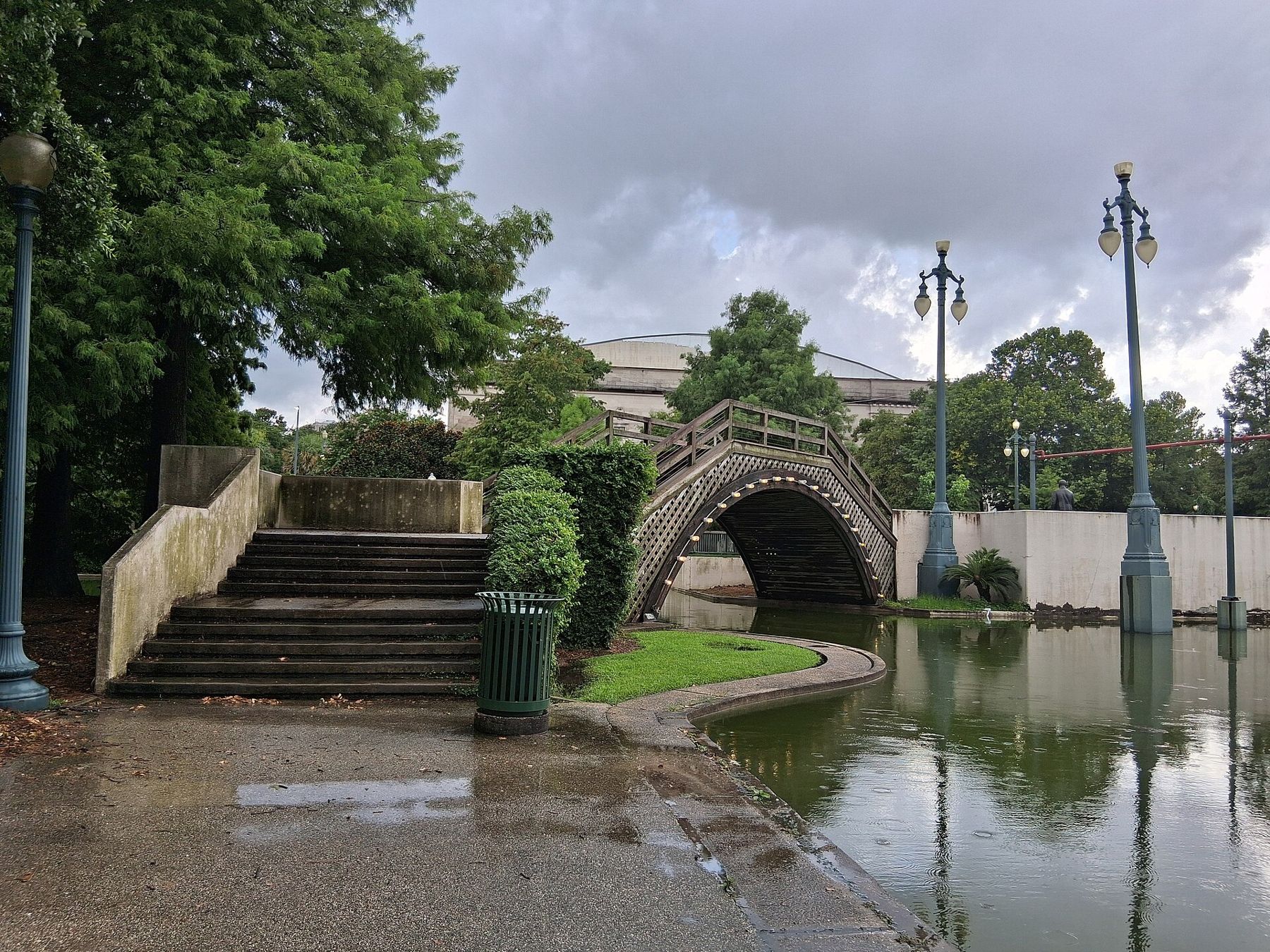
Across North Rampart Street from the French Quarter, an arched gateway with the name of Louis Armstrong leads into a park of lawns, paths, lagoons and statues. Inside, near the entrance, lies an open space of paving and trees known as Congo Square. It is small and easily overlooked. It is also one of the most significant places in the cultural history of the United States.
Congo Square
In the eighteenth and early nineteenth centuries, under French and then Spanish rule and into the early American period, enslaved Africans in New Orleans were often allowed Sundays off. Many gathered in an open area just outside the old city walls, a place that became known as Congo Square. Enslaved and free people of African descent met here to trade, talk, drum, sing and dance, keeping alive musical and cultural traditions from Africa and the Caribbean.
Visitors to the city wrote about the gatherings, which could draw large crowds. The rhythms, dances and songs heard here are widely seen as part of the deep roots of New Orleans music, from brass bands to jazz. The gatherings were later restricted and ended, but the memory of the square remained.
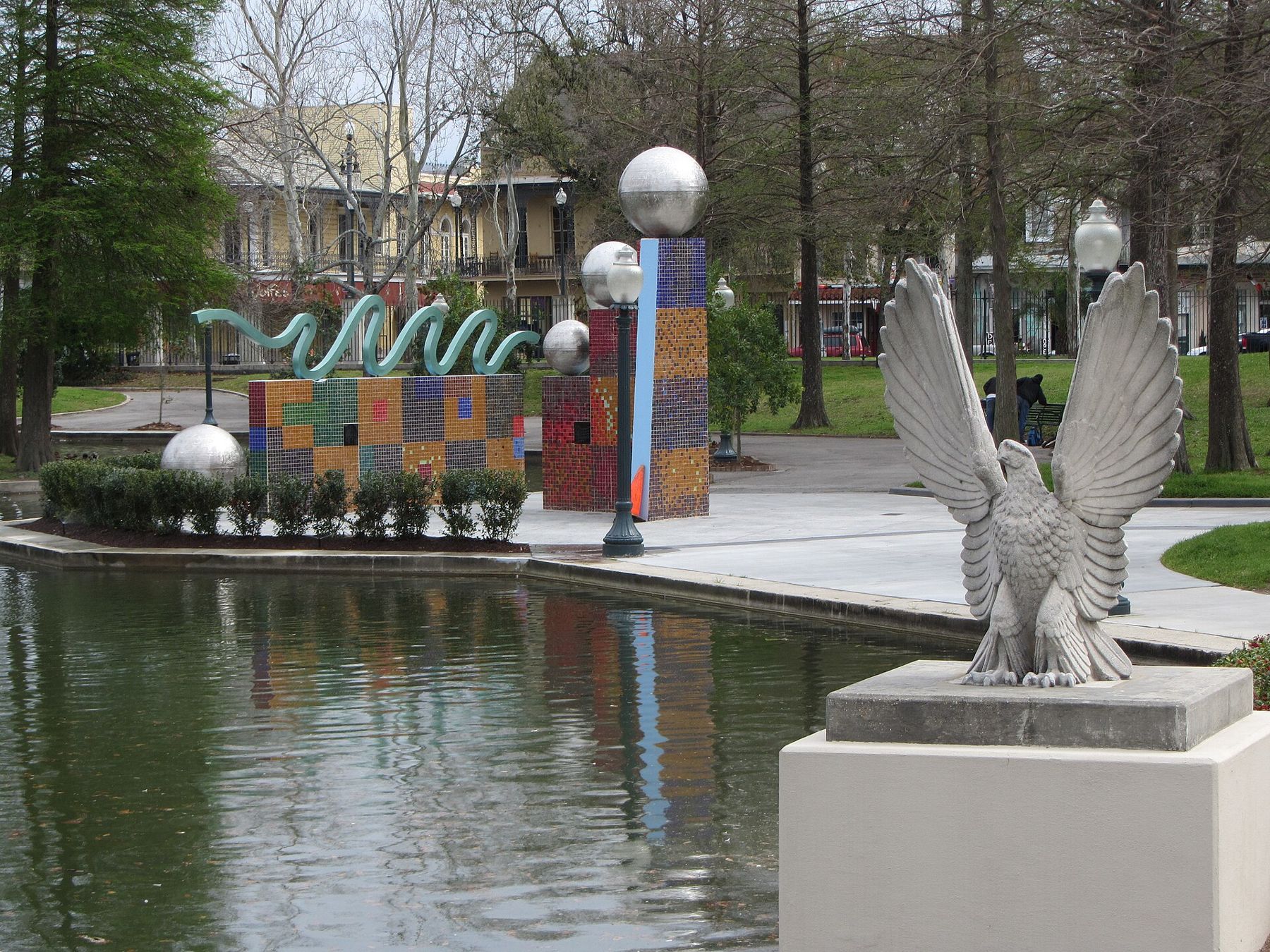
The square today
Today Congo Square is marked by plaques, a circle of paving and trees. Drummers and dancers still gather here at times, and festivals and events celebrate its heritage, with music and dance in the square. Standing here, especially when drums are playing, is a powerful experience. Treat it with the respect due to a place of memory as well as celebration.
Louis Armstrong Park
The park around Congo Square opened in 1980, named after the trumpeter and singer Louis Armstrong, born in New Orleans in 1901. Its creation was controversial: many homes in Tremé, one of the oldest African American neighbourhoods in the country, were cleared for it and for a planned cultural centre. The park includes lagoons with footbridges, lawns, statues of musicians including Armstrong himself, and a performing arts venue.
Statues and walks
Walk the paths around the lagoons and look for the statues. The bronze of Louis Armstrong holding his trumpet stands near the lagoon, and other sculptures honour figures from the city's musical life. Bridges cross the water, and on a quiet morning the park is peaceful, with ducks on the lagoons and the sounds of the city muffled by trees.
Tremé
The neighbourhood of Tremé, which surrounds the park, is rich in history: Creole cottages, churches, social and pleasure clubs, and long traditions of brass bands and second-line parades. A walk through its streets after the park adds depth to the visit. It is a living neighbourhood; respect residents and their homes.
The sound of the square
Another panel · Side gatesThe Lafitte Greenway, canal line to bayouOne to two hoursAccounts of the old Congo Square gatherings describe circles of dancers, drums of different sizes, stringed instruments and call-and-response singing, with traders selling food and goods around the edges. These were moments of freedom and community in a society built on slavery. Musicians and scholars today trace threads from these rhythms into the music that grew up in New Orleans in the following century.
When drummers gather in the square today, often on Sunday afternoons in good weather, the connection becomes tangible. Listen from the edge, and if you are invited to join a dance or a drum circle, do so with respect for the people and the place.
Festivals in the park
The park hosts festivals and concerts through the year, celebrating the city's music and African and Caribbean heritage. During these events, the park fills with stages, food stalls and crowds, and the atmosphere is joyful. Check local listings for dates. On ordinary days, it is much quieter.
Louis Armstrong
Louis Armstrong grew up in poverty in New Orleans and learned to play the cornet as a boy. He became one of the most influential musicians of the twentieth century, transforming jazz with his trumpet playing and singing, and carrying the sound of the city around the world. His statue in the park, with his trumpet and handkerchief, is a favourite spot for photographs.
The arched gateway on Rampart Street, with Armstrong's name spelled out above it, is one of the park's landmarks. At night it is lit, framing the entrance. By day, it makes a natural meeting point before a walk into Tremé or along the greenway.
A walk through Tremé
After the park, walk a few blocks into Tremé. Look for the old churches, the Creole cottages with their shutters and steps, and the small corner buildings where neighbours have gathered for generations. Plaques and murals tell parts of the neighbourhood's story. Keep the walk respectful: this is a residential area, and people's porches and front steps are private space.
Safety and hours
The park has opening hours, and gates may be closed outside them. It is best visited in daylight, when others are about, as with any city park. Events can change access to some areas. Check before you go, and follow posted rules.
Gatepost notes
- Shade is partial; bring a hat in summer.
- Drumming and events are irregular; check local listings if you hope to hear music in the square.
- Photography of performers is generally fine at public events, but ask before close portraits.
- The Lafitte Greenway starts nearby, for walkers and cyclists heading toward Mid-City.
Follow the old canal line on the Lafitte Greenway, or head to the river and Crescent Park. For the city's bigger green spaces, see City Park under the live oaks.