The Fly: a riverbank lawn behind the zoo
At the river end of Audubon Park, a broad lawn slopes down to the Mississippi. Locals call it the Fly. It is where New Orleans comes to watch ships and sunsets.
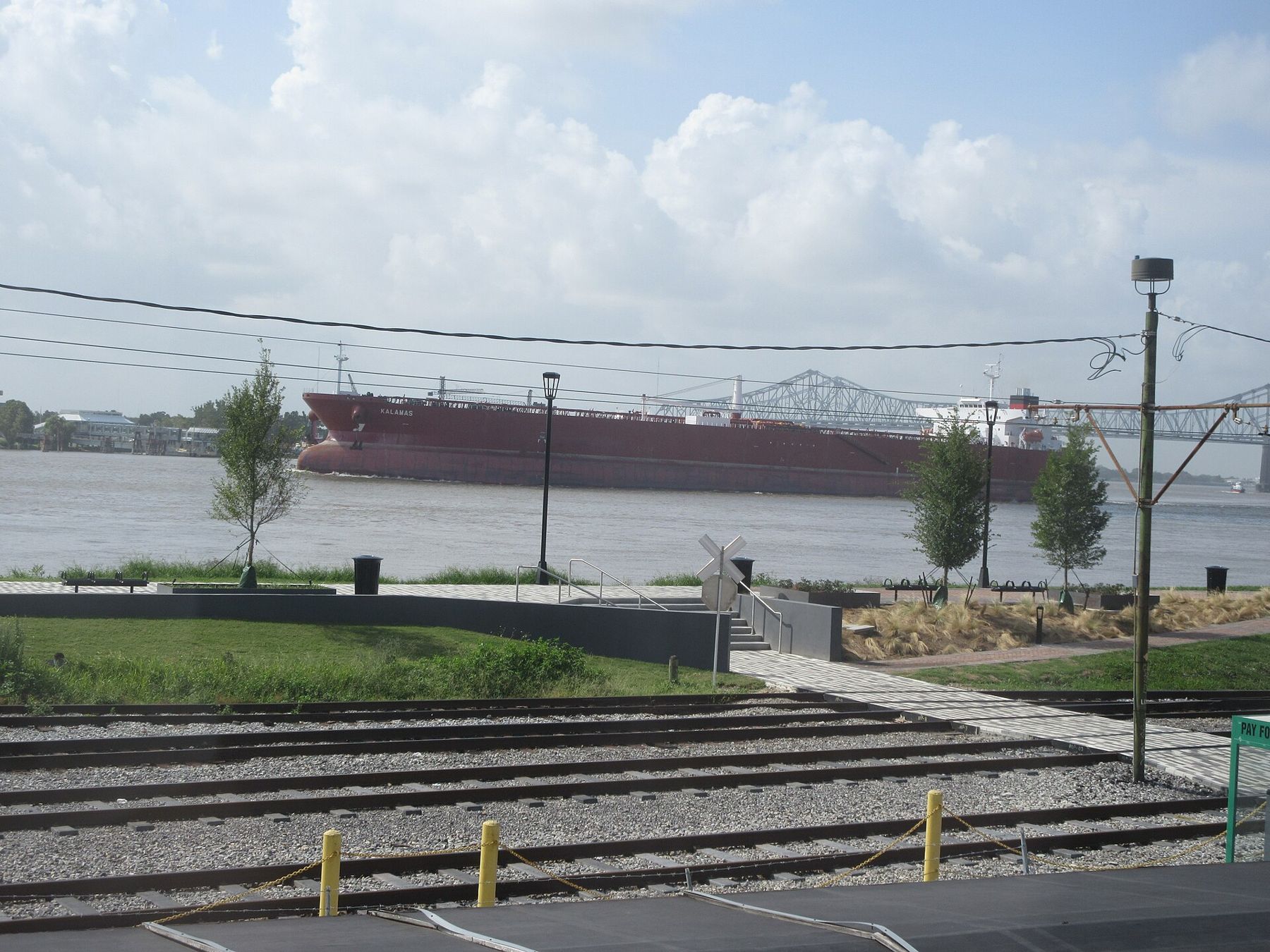
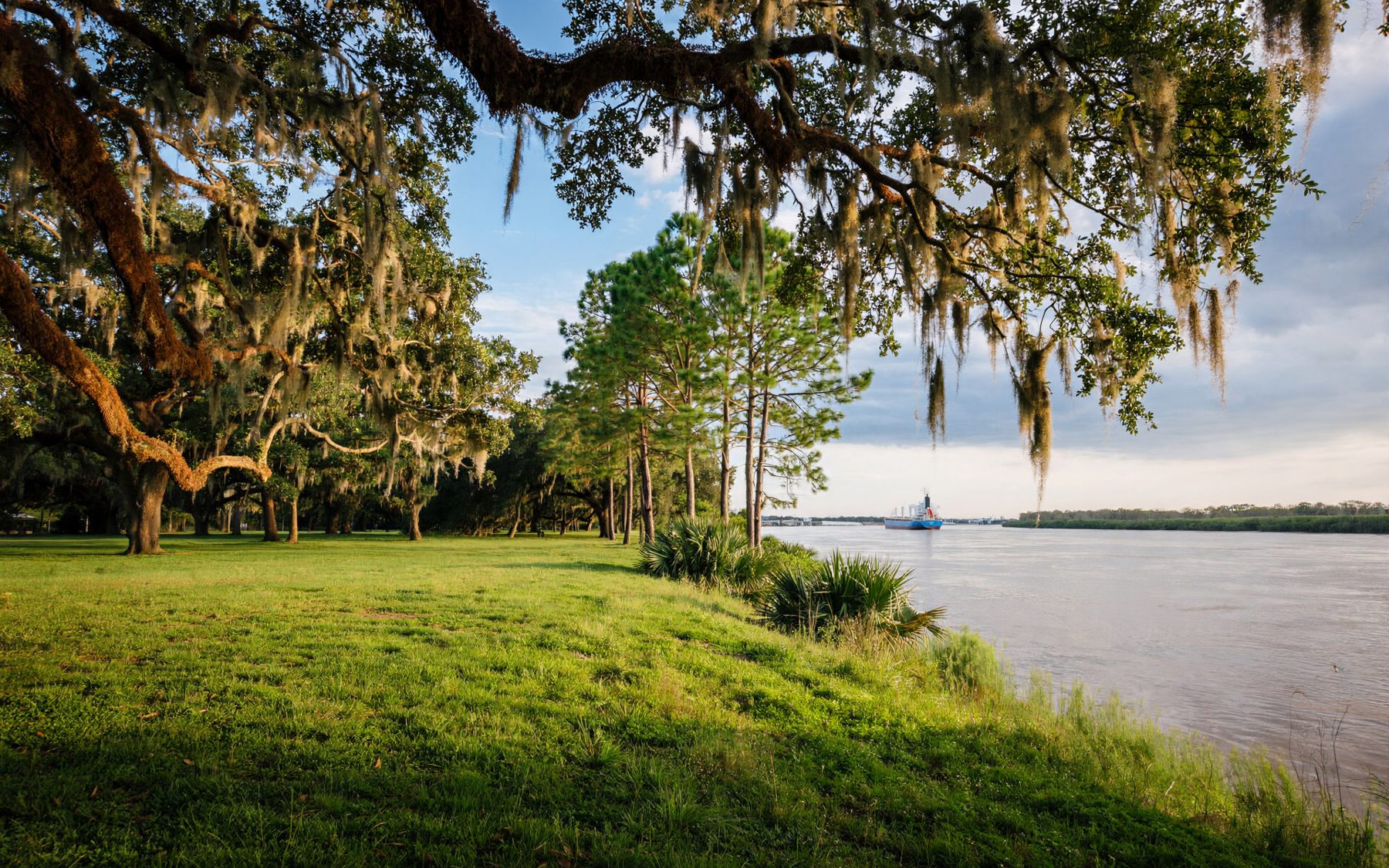
Behind Audubon Zoo, at the far end of Audubon Park from St. Charles Avenue, a wide lawn runs down to a bend in the Mississippi. Officially part of the park's riverfront, it is known to everyone in New Orleans as the Fly. There are no monuments, no attractions and almost no shade. What there is, is space, a river view and a steady procession of ships.
Why the Fly
The name is usually traced to a butterfly-shaped riverfront pavilion that once stood here; the building is long gone, but the name stuck. It is the kind of place locals talk about without explaining, and visitors find almost by accident, walking past the zoo toward the river.
Ships on the river
The Mississippi here is wide, brown and fast, and it is a working river. Tankers, cargo ships and long lines of barges pushed by towboats pass close to the bank, heading to and from the port and the Gulf of Mexico. At high water, the ships seem to float above the level of the city behind the levee. Watching them slide past, often in near silence, is oddly compelling.
When the sun drops behind the river
The Fly faces roughly south and west across the river bend, and sunsets can be spectacular, with the sky reflected in the water and ships silhouetted against it. In the cooler months, the lawn fills with people at the end of the day: families, students, dog walkers, friends with picnics. It is one of the city's most relaxed social spaces.
No shade, no swimming
The lawn is open to the sun, with little or no shade. In summer, avoid the middle of the day; come in the evening, and bring water and a hat. Never swim in the Mississippi. The current is powerful and unpredictable, the water is deep close to the bank, and ships pass constantly. Keep children well back from the water's edge and the rocks.
The levee path
From the Fly, a paved path runs along the top of the levee upriver, out of the city and into Jefferson Parish, part of a long trail along the river. It is popular with cyclists and runners and gives wide views of the river and the neighbourhoods below the levee.
The road up
Take the St. Charles streetcar to Audubon Park, then walk through the park, past the lagoons and around the zoo, to the river. The walk takes about half an hour. There is parking near the riverfront, which fills at busy times.
Life on the lawn
On weekends, the Fly hosts informal games: frisbee, football, volleyball, and children running down the slope toward the water. Students from the nearby universities come here to relax, and families set up for the afternoon. On some holidays, the lawn fills with gatherings that last into the evening. On weekday mornings, by contrast, it can be almost empty, with only a few dog walkers and the ships for company.
Another panel · Levee pathsThe levee: walking and cycling beside the MississippiAn hour or a dayReading the river
The Mississippi's level changes through the year, rising with snowmelt and rain from the vast basin upstream, usually in late winter and spring, and falling in late summer and autumn. At high water, the river runs high against the levee and the current is visibly fast; at low water, sandbars and more of the bank appear. The levee and floodwalls keep the river out of the city, and the river is closely watched by engineers.
The river's traffic
The lower Mississippi is one of the busiest waterways in the world. Ships carry grain, oil, chemicals and containers, and towboats push long rafts of barges. Pilots who know the river guide the big ships through its bends. Watch for the ships slowing and turning as they negotiate the curve below the city.
A local rhythm
Spend an evening here and you will see a side of New Orleans that has little to do with the French Quarter: neighbours meeting after work, students with guitars, children chasing each other down the slope, old friends watching the river in folding chairs. Join in quietly: bring a blanket, something to drink and eat, and let the river do the rest.
In winter, the lawn is cooler and quieter, and a sunny afternoon on the Fly in January can be one of the loveliest experiences of a visit to the city. Bring a warm layer as the sun drops; the river air turns chilly fast.
Planning an evening
A good plan is to take the streetcar to Audubon Park in the late afternoon, walk the loop past Bird Island as the light softens, then carry on to the Fly to watch the sun go down over the river. Bring a blanket, something to drink and eat, and a light layer. When it is dark, walk back through the park while others are still about, or arrange a ride from the riverside parking area.
Out of season, the Fly is calm and spacious, a fine place to read or simply watch the water.
Gatepost notes
- Bring everything you need: there are few facilities on the lawn.
- Take your rubbish home.
- Mosquitoes come out at dusk in warm months.
- Watch the weather: thunderstorms build quickly in summer, and the open lawn is no place to be in lightning.
For the park on the way, read Audubon Park and the river view, and for the long path along the river, the levee path. Summer heat planning is covered in the outdoor year.