The sculpture garden by the lagoon
Beside the art museum in City Park, more than ninety sculptures stand among live oaks, magnolias and lagoons. The garden is free to wander, and it is at its best in the cool of the morning.
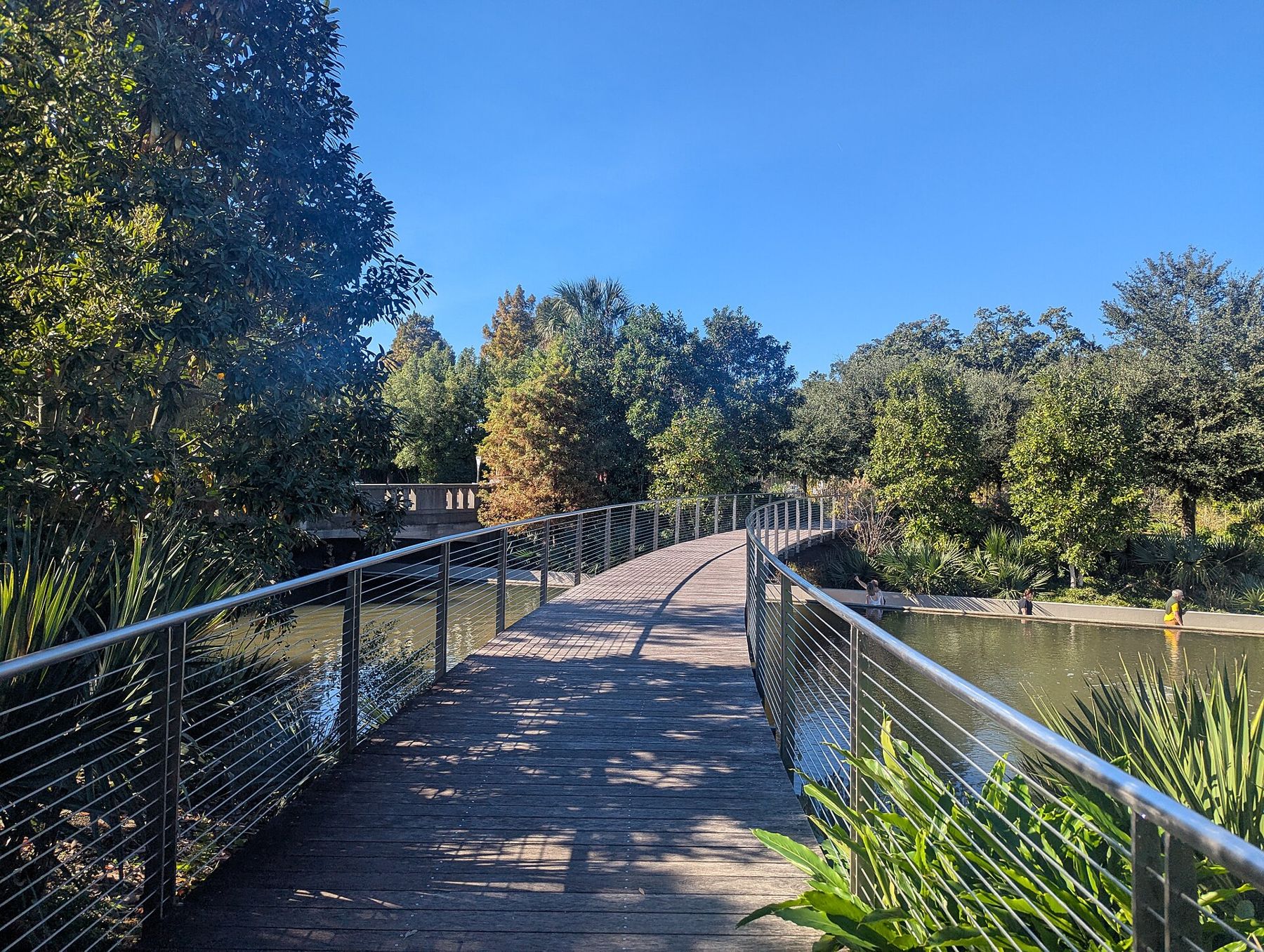
Next to the New Orleans Museum of Art, at the southern end of City Park, the Sydney and Walda Besthoff Sculpture Garden sets modern and contemporary sculpture into a landscape of old live oaks, pine trees, magnolias and lagoons. Paths and footbridges wind between the works, and the combination of art and Southern landscape is the point: the sculptures are seen against moss-hung branches, reflected in water, framed by leaves.
A garden of two parts
The garden opened in 2003 around the lagoon beside the museum and was greatly extended in 2019 across the water, adding new paths, a canal and more sculpture. Together the two sections hold more than ninety works by artists from around the world. Some are huge, some small and easy to miss; some are abstract, some figurative and playful.
Entry to the garden has been free, which makes it one of the best free things to do in the city. Hours change with the seasons and for events, so check before you go.
How to walk it
There is no set route. Start at the museum end and follow the paths around the original lagoon, then cross into the newer section, where a long canal and a footbridge lead through more open ground. Take time at the water: several works are designed to be seen from the paths across the lagoons, and the reflections change with the light.
A full loop takes an hour or so at a gentle pace; longer if you stop to sit on the benches under the oaks, which you should.
Trees as much as art
The garden's trees are as much a part of it as the sculptures. The live oaks are among City Park's older trees, with moss and resurrection fern on their branches. Magnolias flower in late spring, and the lagoons attract herons, egrets and turtles. In the morning, birdsong fills the garden before the traffic noise rises.
Shade and heat
The original section is well shaded under the oaks. The newer section is more open and can be very hot by midday in summer. Come early, wear a hat, carry water, and use the shaded benches. In the cooler months, the whole garden is pleasant at any hour.
With the museum
The art museum next door, housed in a classical building of 1911 at the end of the oak-lined avenue, has wide-ranging collections, with entry charged. Many visitors combine a morning in the garden with an hour or two inside the museum during the hottest part of the day. Check its opening days, which are fewer than the garden's.
Respecting the works
- Do not climb on or touch the sculptures unless a sign invites it.
- Stay on the paths around the water's edge; the banks can be soft.
- Keep children close near the lagoons.
- Bicycles, pets and picnics may be restricted; follow the garden's posted rules.
Pieces you may meet
The collection changes slowly, with new works added over time. It includes pieces by well-known international sculptors alongside artists from Louisiana and the American South. Some works respond directly to the setting, placed so that a figure looks out across the water, or a mirrored surface reflects the oaks. Others are bold, colourful interruptions in the green. Labels beside each work give the artist and title.
Look up as well as around: a few works are tall, and some are tucked into the trees or placed on islands in the lagoon. Children often enjoy spotting the more playful pieces.
Seasons in the garden
Spring brings azaleas, magnolias and new green on the oaks, and the lagoons are lively with birds. Summer is lush but hot. Autumn and winter are mild, with clearer light and fewer visitors, and the bare branches of a few deciduous trees open up new views of the sculptures. Every season has its own character, and regulars come back again and again.
A quiet hour
The garden is busiest at weekends and during events. On weekday mornings, it can be almost empty, and it becomes one of the most peaceful places in the city: birds, water, shade and art. Bring a book or a sketchbook and sit for a while.
Photography
Personal photography is generally welcome in the garden, and the combination of sculpture, trees and water makes for striking pictures, especially in early morning light. Commercial shoots, tripods in busy areas and drones may need permission. Be considerate of other visitors, and do not climb on works or step off paths for a shot.
Early morning light from the east falls across the lagoon and the oaks, while late afternoon brings warmer tones. Overcast days soften shadows and suit the darker metal works.
Families and children
The garden is a good place for children, with space to walk, water to look at and sculptures that spark questions. Some works are huge and dramatic, others funny or strange, and children often enjoy hunting for particular pieces on a printed map. Keep close to young children near the lagoons, where banks can be steep, and remind them not to climb on the art. Bring water and snacks, and plan a rest on a shaded bench.
The road up
The Canal Street streetcar line to City Park stops near the museum, at the end of Esplanade Avenue. From there it is a short walk along the avenue of oaks to the museum and the garden. Parking near the museum fills at busy times.
For a longer walk under the oaks, read City Park under the live oaks, and for the birds that visit the lagoons, birds of the city parks.